




 Adventure Tours
Luxury coach hire for touring the Scottish Highlands gives your group the freedom to experience one of the most spectacular landscapes in Europe without the stress of driving unfamiliar roads, navigating single-track passes, or finding somewhere to park. From the dramatic valley floor of Glencoe to the legendary waters of Loch Ness, from the fairy-tale silhouette of Eilean Donan Castle to the vast Arctic plateau of the Cairngorms, the Highlands rewards groups who travel together and travel well.
Scotland’s Highlands cover an enormous area. Inverness, the capital of the Highlands, sits around 168 miles north of Glasgow by road, a journey of roughly three hours and twenty minutes on a clear run. Fort William, the gateway to Ben Nevis and the western Highlands, is about 104 miles from Glasgow and just over two hours by coach. Glencoe lies around 90 miles north of Glasgow, taking approximately one hour and forty-five minutes. These are not short distances, which is exactly why coach travel makes sense for groups. A driver handles everything, your group arrives together, and the journey through some of the most scenically extraordinary countryside in Britain becomes part of the experience rather than a chore.
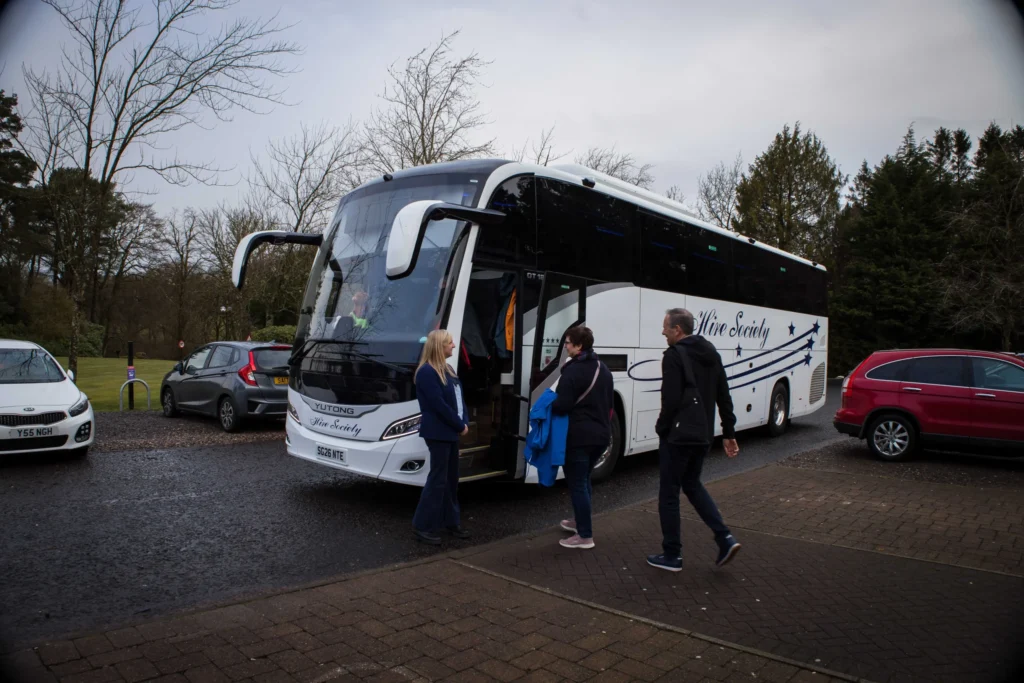
Hire Society has operated group transport across Scotland for over 25 years. Our fleet ranges from a 19-seat midi coach to a 74-seat large coach, with the new Yutong GT12 53-seater offering a genuine business-class experience for groups expecting comfort on longer journeys. This guide covers everything you need to plan a Highland tour by coach, including the key destinations, what makes each one worth visiting, and how to structure a day or multi-day itinerary that works for a group.
Why the Scottish Highlands Are Best Explored by Coach
The Scottish Highlands present a particular set of challenges for independent group travel. The roads are often single-track, especially on routes towards the Isle of Skye and the far northwest. Parking at popular sites like Glencoe and Eilean Donan is frequently congested in summer months. And the distances between attractions mean that dividing a group across multiple cars almost guarantees someone getting lost, arriving late, or missing out.
A private coach eliminates all of these problems at once. Your driver knows the roads, knows where coaches can access each site, and takes responsibility for getting everyone there and back on time. For a group arriving together at somewhere like the shore of Loch Ness or the floor of Glencoe, the shared experience of the journey and the arrival is genuinely part of the memory.
There is also the matter of comfort. The Highlands demand longer journeys. On a full Highland tour from Glasgow taking in Glencoe, Fort William, and Loch Ness, you might cover 200 to 250 miles in a day. On our Yutong GT12, that means reclining half-leather seats, USB charging at every seat, full climate-controlled air conditioning, an onboard toilet, and twin 22-inch screens. That is a fundamentally different experience from being folded into the back of a hire car for six hours.
Key Destinations for a Scottish Highlands Coach Tour
Here are the major stops on any worthwhile Highland tour from Glasgow, with verified distances and approximate driving times.
| Destination | Distance from Glasgow | Approx. Drive Time |
| Glencoe | ~90 miles | ~1 hr 45 mins |
| Fort William / Ben Nevis | ~104 miles | ~2 hrs |
| Glenfinnan Viaduct | ~120 miles | ~2 hrs 20 mins |
| Eilean Donan Castle | ~145 miles | ~2 hrs 45 mins |
| Inverness | ~168 miles | ~3 hrs 20 mins |
| Loch Ness (Drumnadrochit) | ~155 miles | ~3 hrs |
| Cairngorms (Aviemore) | ~140 miles | ~2 hrs 30 mins |
Glencoe
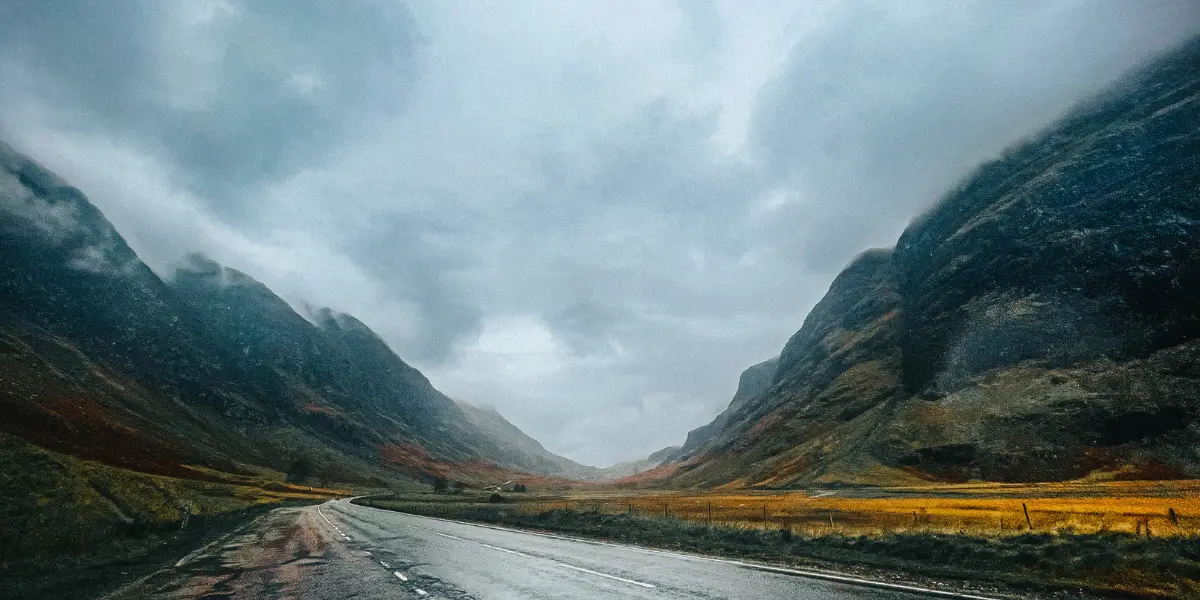
Glencoe is the first major landmark most Highland tours reach from Glasgow, and it rarely fails to stop conversation. The glen runs from Rannoch Moor through steep-sided mountains to Loch Leven, with the iconic ridge of
Glencoe is the first major landmark most Highland tours reach from Glasgow, and it rarely fails to stop conversation. The glen runs from Rannoch Moor through steep-sided mountains to Loch Leven in Argyll, with the iconic peak of Buachaille Etive Mor guarding its eastern entrance. The National Trust for Scotland has cared for Glencoe since 1935, when it purchased 12,800 acres of land to prevent commercial development. Today it manages the visitor centre, walking trails, and conservation of the surrounding landscape.
The glen carries a weight of history that adds to its atmosphere. On 13 February 1692, 38 members of the Clan MacDonald were killed by Scottish government troops in what became known as the Massacre of Glencoe. The MacDonalds had sheltered their attackers for around two weeks before the order came to execute all those under the age of 70. The event shocked contemporaries and remains one of the most significant episodes in Scottish Highland history. The Glencoe Visitor Centre tells the story through a short film and exhibition, and several of the massacre sites are accessible on foot from the visitor centre car park.
Ben Nevis and Fort William
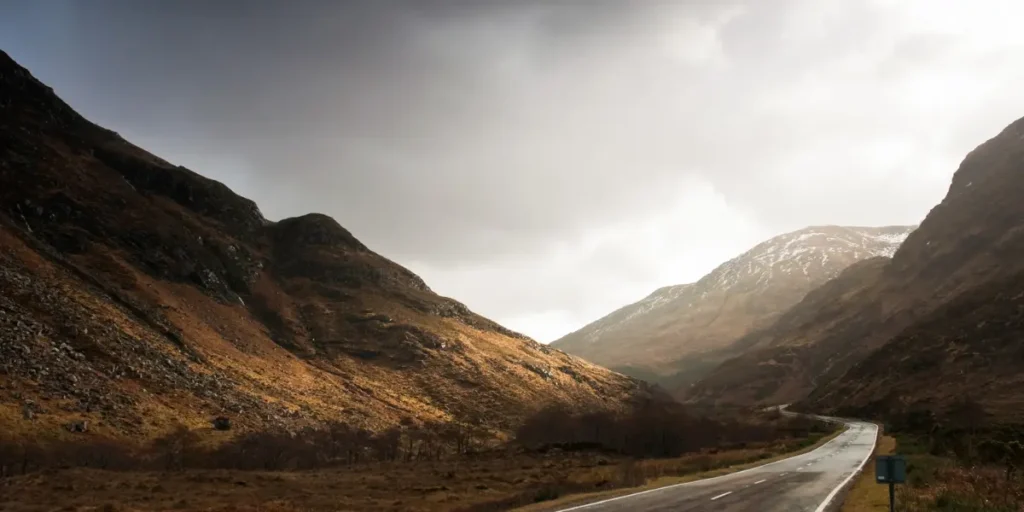
Fort William sits at the foot of Ben Nevis, the highest mountain in the United Kingdom, standing at 1,345 metres (4,413 feet) above sea level. The mountain attracts an estimated 150,000 visitors a year, the majority of whom use the Mountain Track from Glen Nevis Visitor Centre, a 17-kilometre round trip taking between seven and nine hours for most walkers. Fort William itself is a well-equipped Highland town with shops, restaurants, and accommodation, making it a natural stopping point on any Highland tour.
For groups not planning to climb, Fort William offers the base for the Jacobite Steam Train, one of the most celebrated railway journeys in the world. The train runs along the West Highland Line from Fort William to Mallaig, crossing the Glenfinnan Viaduct, which featured in the Harry Potter films as the route to Hogwarts. The Glenfinnan Monument at the head of Loch Shiel also marks the spot where Bonnie Prince Charlie raised his standard in August 1745, launching the final Jacobite Rising. These are historic sites of genuine significance, not tourist fabrications, and the scenic drive along the Road to the Isles from Fort William to Glenfinnan is outstanding.
Eilean Donan Castle
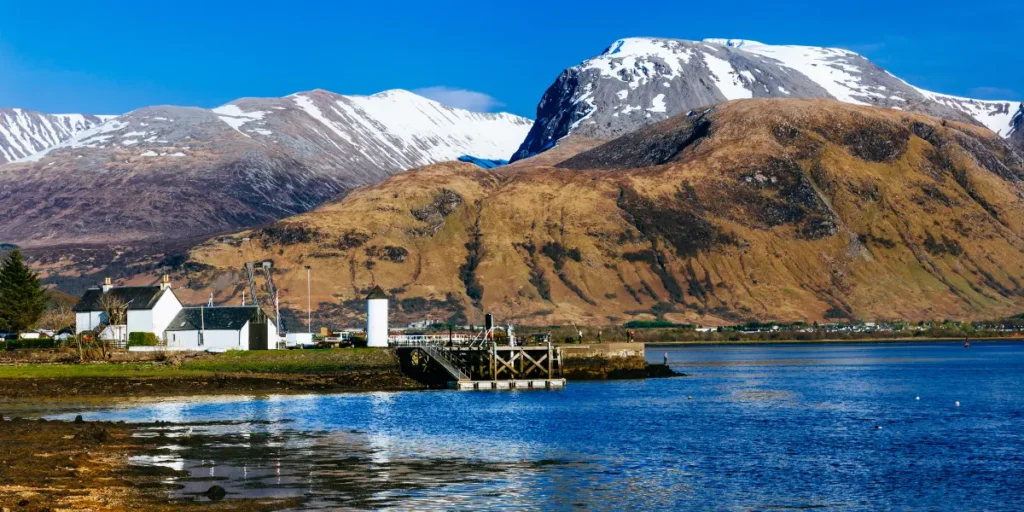
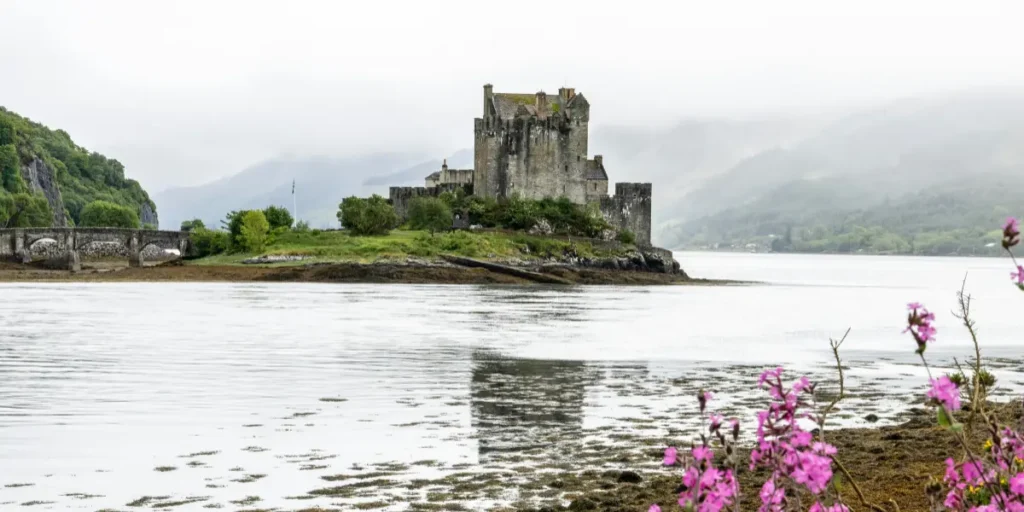
Eilean Donan Castle is one of the most photographed monuments in Scotland and widely considered the most iconic castle image associated with the Highlands. It sits on a small tidal island at the confluence of three sea lochs, Loch Duich, Loch Long, and Loch Alsh, connected to the mainland by a stone footbridge. The original castle was built in the 13th century as a stronghold of Clan Mackenzie. In 1719, during a Jacobite uprising supported by Spanish troops, the castle was bombarded by three Royal Navy frigates and largely destroyed. It lay in ruins for nearly 200 years before Lieutenant Colonel John Macrae-Gilstrap bought the island in 1911 and spent 20 years and £250,000 (equivalent to around £18 million today) restoring it to its current form. The restored castle opened in 1932.
The castle has appeared in several films, including Highlander in 1986 and the James Bond film The World Is Not Enough in 1999, in which it doubled as MI6’s Scottish headquarters. Visitors today can explore the Banqueting Hall, the Kitchen, the Jacobite Room, and climb the ramparts for views across the lochs. There is a visitor centre and gift shop on the mainland side of the bridge.
Loch Ness and Inverness
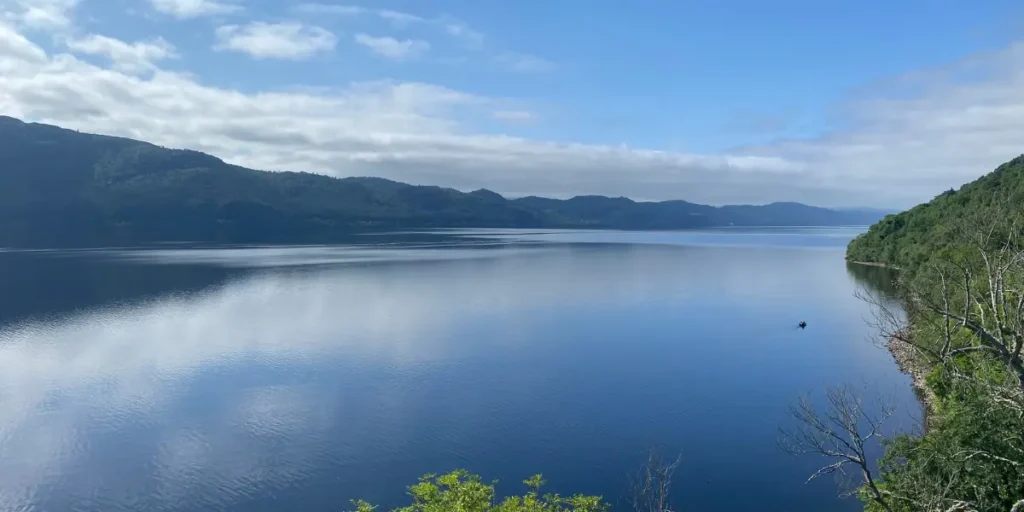
Loch Ness stretches for approximately 37 kilometres (23 miles) from Fort Augustus in the south to Loch Dochfour in the north, following the Great Glen fault line that cuts across the Highlands. It is the largest body of freshwater in the British Isles by volume, containing more water than all the lakes of England and Wales combined, despite being only the second-largest Scottish loch by surface area after Loch Lomond. Its deepest point reaches 230 metres (755 feet), making it Scotland’s second deepest loch after Loch Morar at 310 metres. The loch never freezes, even in severe Scottish winters, due to the thermal mass of its enormous volume of water. The Loch Ness legend dates to 565 AD when Saint Columba reportedly encountered a water beast in the River Ness, though the modern Nessie phenomenon began in 1933 when sightings were first reported in the press.
Urquhart Castle, a ruined fortress on a promontory on the western shore of Loch Ness, is one of the most visited castle sites in Scotland. It guarded the Great Glen for over 500 years before being partially blown up in 1692 to prevent it falling into Jacobite hands. The visitor centre on site tells its story and includes artefacts recovered during excavations. Inverness, around 10 kilometres north of Loch Ness, was granted city status in 2000 and serves as the administrative capital of the Highland Council. It sits approximately 168 miles from Glasgow by road.
The Cairngorms National Park
The Cairngorms National Park is the largest national park in the United Kingdom, covering 4,528 square kilometres (1,748 square miles), more than twice the size of the Lake District. Established in 2003, it contains five of Scotland’s six highest mountains and is home to a quarter of the UK’s threatened bird, animal, and plant species. Around 2 million people visit each year. The park is the only place in the UK with a free-ranging reindeer herd, introduced in 1952 by a Swedish herdsman. Aviemore, the main town within the park, sits approximately 140 miles from Glasgow by road.
The Cairngorms offer a different character to the western Highlands. Where Glencoe and the Eilean Donan route feel dramatic and coastal, the Cairngorms are vast, elevated, and austere, an ancient granite landscape of pine forests, river valleys, and sub-Arctic plateau. For groups, the park offers distillery visits, wildlife spotting, and access to Speyside, the heartland of Scotch whisky production.
Sample Itineraries for a Highland Coach Tour
The table below gives an overview of how different group trips can be structured depending on available time.
| Trip Type | Key Stops | Approximate Distance | Best For |
| Classic Day Trip | Glencoe, Loch Lomond, Rannoch Moor | ~150 miles | All group sizes |
| Western Highlands Day | Glencoe, Fort William, Glenfinnan | ~200 miles | History and scenery fans |
| Loch Ness Day Trip | Glencoe, Inverness, Loch Ness, Urquhart Castle | ~250 miles | Culture and legend seekers |
| Eilean Donan & Skye (2 days) | Fort William, Eilean Donan, Isle of Skye | ~280 miles | Full Highland experience |
| Cairngorms Escape | Pitlochry, Aviemore, Speyside Distilleries | ~180 miles | Whisky and wildlife groups |
What Makes a Good Highland Coach Tour?
The most common mistake groups make when planning a Highland tour is trying to cover too much ground in a single day. The distances are real, the roads are often slow, and the landscapes deserve time. A group that rushes from Glencoe to Loch Ness to Eilean Donan in a single day without stopping properly will have spent the day in the coach rather than experiencing the Highlands.
A well-planned Highland tour picks two or three anchor stops and builds the day around them. Glencoe and Fort William work beautifully together. Loch Ness and Inverness pair naturally. Eilean Donan combines well with a crossing to the Isle of Skye. When you book with Hire Society, we will talk through your priorities and help you structure an itinerary that works for your group, the time available, and the interests on board.
When it comes to corporate groups, we can incorporate distillery visits, Highland estate lunches, and scenic driving routes that serve as team-building experiences in their own right. For wedding parties or family celebrations, we can build a full Highland day around a milestone event. With regards school or community groups, the Highlands offer unparalleled educational and cultural content that no classroom can replicate.
Choosing the Right Vehicle for a Highland Tour
| Vehicle | Seats | Best For | Key Features |
| Midi Coach | Up to 19 | Small groups, family outings, private tours | Compact, agile on Highland roads |
| Yutong GT12 | 53 + courier seat | Corporate groups, large tours, weddings | Half-leather seats, USB charging, onboard toilet, mood lighting, 8.5m3 luggage hold |
| Large Coach | Up to 74 | Community groups, large organisations | Maximum capacity for bigger parties |
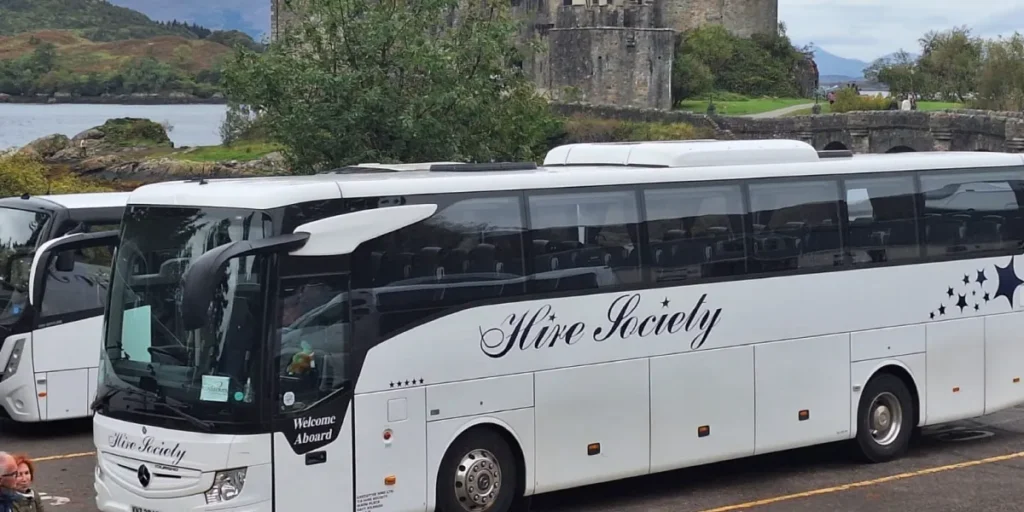
The 19-seat midi coach is agile on narrower Highland roads and ideal for private family groups or corporate teams that want a boutique touring experience. The Yutong GT12 is our premium vehicle for Highland touring, with its reclining half-leather seats, USB-A and USB-C charging at every seat, full climate-controlled air conditioning with separate driver and passenger zones, centre-mounted onboard toilet, Bosch multimedia twin screens, LED mood lighting, and 8.5 cubic metres of luggage hold. For groups covering 200 miles or more in a day, the difference between a standard coach and the GT12 is noticeable. Every vehicle in the Hire Society fleet has three-point seatbelts fitted as standard, and every driver is PVG-checked and licensed for passenger transport.
Plan Your Scottish Highlands Tour with Hire Society
Planning a group trip to the Highlands? Hire Society takes care of all the logistics, from vehicle selection and route planning to driver briefing and on-the-day coordination. We have been running Highland tours and long-distance group transport from Glasgow and the surrounding area for over 25 years, and we know these routes and their demands. Tell us your group size, your preferred date, and the destinations you want to include, and we will come back with a clear, competitive quote. Contact Hire Society to get started.
Frequently Asked Questions
It depends on your destination. Glencoe is approximately 90 miles from Glasgow and takes around one hour and forty-five minutes. Fort William is around 104 miles and just over two hours. Inverness is approximately 168 miles and takes around three hours and twenty minutes on a clear run. Eilean Donan Castle is around 145 miles and roughly two hours and forty-five minutes.
Larger coaches are suitable for the main A-road routes through the Highlands, including the A82 along Loch Lomond and through Glencoe, and the A87 to Eilean Donan and the Isle of Skye. Some single-track roads and more remote areas are better suited to our 19-seat midi coach, which is smaller and more manoeuvrable. When you book, we will discuss your planned route and recommend the right vehicle.
Yes, though it is a long day. Loch Ness via the most direct route is around 155 miles from Glasgow, and a return trip including time at the loch and Urquhart Castle will typically take around 10 to 11 hours. Many groups choose to incorporate Glencoe and Fort William on the way north, making it a full Highland circuit. If you want more time at each location, an overnight stop in Inverness or Fort William is worth considering.
June to September is the most popular period for Highland touring. Days are long, the landscape is at its most accessible, and the main visitor sites are all open. That said, September and October offer some of the most dramatic colours, particularly in glens like Glencoe. Winter tours are possible but some mountain roads can close in severe weather, and certain visitor attractions operate reduced hours. VisitScotland provides up-to-date seasonal guidance on conditions and events across the region.
Comments are closed